Showing posts with label Internet. Show all posts

Monday, January 05, 2015

Fido and Facebook Filthier than Flying

Approaching Ushuaia, the world's southernmost city, in Argentina.
Yes, so I fly. A lot. Does that make me a bad person? The reason why island nations around the world are "sinking"? One of the most wanted people alive for crimes against climate?

No.

Monday, June 10, 2013

Media: Why Broadcasting is Needed in Emergencies

The aftermath of the Boston bombings. Creative Commons licenced by Hahatango.

When do you need information the most? In an emergency. The problem is only that your preferred means of communication is unlikely to work. Your smartphone. Which without a connection to the outside world is as dumb as your high school calculator.

Thursday, April 18, 2013

Friday, November 02, 2012

There's a New Buzzword in Town; LTE-A


A report by independent Dutch research institute TNO compares various networks that may be used to cover a country with digital radio and mobile television. LTE-A (Long Term Evolution Advanced) is the newest buzzword, or buzz acronym rather, to come from mobile network operators and the technology has been included in the comparison.

TNO is looking to its own country for a case. In the Netherlands, 16.5 million people share 31,000 square kilometers. An LTE-A network will require 38,500 transmitters on almost 13,000 sites to reach all of them, according to TNO. A DMB/DAB+ network will require 30 transmitters on the same number of sites. The differences in building costs, site rentals and other running expenses are major. The running costs for a LTE-A transmitter is 60,000 USD per year, according to Arqiva back in 2010.

Given that those figures still are accurate means running costs of 2.3 billion USD a year. In addition to four times as much in investments. That means that whoever would want to buy such a network covering over 99% of the country would need 4 million paying customers (25% of the population) to each pay 1,150USD a year to break even. And a revenue on top would be nice.

The TNO report maintains the need for cost efficient distribution solutions, that the capacity crunch in mobile networks is very real and that broadcasting networks are the most efficient means to distribute live content to a large audience.

The report has been commissioned by IDAG and will shortly be available to paying IDAG members. Not among those? Please get in touch with Ron du Croix to buy a license for individual or corporate use.

In January 2011 I wrote Why 4G is Hyped which you may also find useful.


Thursday, October 18, 2012

Video Killed the Internet Star

Both Netflix and HBO are currently expanding to new markets. 

The costs of distributing on demand television via the internet are higher than via broadcasting as soon as you pass only 8,000 viewers, according to IHS Screen Digest.

To distribute one hour of web tv to 8,000 people will cost 29.58 Euro, or 0.003698 Euro per user hour. The price of an hour of broadcasting is 28.62 Euro, again according to IHS Screen Digest. The difference is that broadcasting can reach an infinite number of people bringing the cost per user hour to virually zero.

That means that a programme that is watched by, say 8 million people (as the highest freefall jump last week), will cost 29,580 Euro per hour to distribute via the internet. That is over a 1000 times more than the 28.62 Euro it will cost if it was broadcast.

But is 8 million viewers a lot? Not necessarily. Several events have reportedly had around one billion viewers. The cost then, if it were to be distributed via the internet (this is very hypotethically, as the infrastructure wouldn't at all be able to cope) would then be 3,697,500 Euro per hour, against 28.62 if broadcast. 129,000 times more expensive (given that all the viewers are in one country), in other words.

How does this translate to current television figures? IHS has made an estimation for the UK, given that all current TV viewing were to be distributed via the internet (again, very hypothetically). The CDN costs alone would exceed 1.2 billion Euro per year.

In the US, videos from Netflix alone is to "blame" for 33% of all internet traffic! And Netflix only provides on demand video, which in the US accounts for 2% of viewing times (98% is on traditional television, live or time shifted). Add YouTube traffic, and the figure increases to 44%. What if you add all live television viewing? You do the maths. And remember that Netflix and YouTube are not alone. HBO, Hulu, The BBC and others also provide online video services or are planning to do so.

The internet will not be able to distribute all sorts of radio and television content. It is already struggling with on demand videos. The figures shown above may illustrate why we need both broadcasting and the internet even clearer than other examples. I have provided a range of them in various blog posts the last few years, included posts such as Why the Internet Won't Solve Everything.

Maybe broadcasting isn't so stupid and old fashioned after all.


Saturday, November 05, 2011

Little Visa Problems in Big China

You now have to scan your passport to get Wi-Fi access at PEK.

I just arrived at PEK, aka. Beijing International Airport. I am on my way to Seoul on business, so I am just about to transfer here for almost four hours. I have transferred here many times before, and I don't mind since my frequent flier card gives me lounge access. The Star Alliance lounge at PEK is pretty good and the airport is nice, modern and clean.

Too many visas
But today was not like the other times. I had just left my CA flight from Stockholm and was to go through international transfers. Usually that takes a minute. You have to look into the camera, have your photo taken and both boarding pass and passport stamped. This time this procedure proved difficult. Why? Apparently because of my visa to Nigeria which I used this summer. The policeman picks up his phone, calls his supervisor who comes speeding over on his Segway five minutes later. They converse, before the supervisor takes my passport and speeds off with his walking machine. Ten minutes later the policeman offers me a chair. I start fearing that this will take a while. 15 minutes later he has finished the other transfer passengers. He is on the phone again before asking me to follow through a couple of gates. He shows me into "Special Examination Room." Beautiful! No rubber gloves in sight though.

There three other police officers are going through my passport, checking every single visa against a database of scanned visas. Some problems though.

- Is Guinea a country, one of the officers ask?
- That is for Equatorial Guinea, not Guinea. I try to explain.
- Ghana?
- No, Equatorial Guinea.
- Oh. Is that a country or an area?
- It's a country.

I am asked to sit down. One police officer remains in the room with me, going through every visa and every stamp in my passport. That is currently 51 (I just counted).

- Which country is this?
- Grenada.
- Grenada?
- Yes, it's in the Caribbean.

She finds Grenada in an internal database and a word document with a lot of text and several scanned versions of the Grenada visa. She is going through every one of my 51 visas and stamps, apparently looking for any that do not look real.

Country games
- Which country is this?
- Trinidad and Tobago.
- And this.
- Chad.
- How about this?
- Iraq.
- ??
- Central African Republic.
- What?
- Central African Republic.
- Which country?
- Republic of Central Africa.

She finally finds it and checks the database for matching visas. We continue the game for 10 or 15 minutes.

- Please wait here.

She leaves. After 20 minutes I am starting to get slightly impatient. There is nothing much in the 10 square meter big room except for the desk with the computer, one Segway being charged, a microphone in the ceiling, a metal cabinet and a surveillance camera.

I walk out to try to find her. She is standig by three senior colleagues, still going through my passport, scanning every single page. My visas have now likely been added to their collection.

Lounge time
I  am finally allowed to leave, and I go to the Air China lounge. I ask for the Wi-Fi password which has been printed on small pieces of paper in the past. No longer so.

- The passport machine, the woman behind the counter sneers and looks down.

She must be having a bad day or just been asked the same questions way too many times.

Passport machine? Oh yes. You will now have to register your passport in order to get access to Wi-Fi at PEK.

According to Ministry of Public Order No. 82 Passengers online should authenticate by real name.


OK, so not only is large and important parts of the internet blocked. Now, they do also want to know all the personal details of everyone that uses what is left of it. One can only imagine what can and may be cross checked.

blogger.com, where I write this blog, is for instance blocked. So is Norwegian Broadcasting Corporations website, Facebook and Twitter. The solution is to use VPN. I don't know if everything I do and surf on can still be tracked, but at least I could write this blog post.

Korea, here we come. Land of the free.

South Korea, that is.

Tuesday, August 30, 2011

Looking Outside the Box


Broadcasting has traditionally been seen as a way to distribute radio and television. Some has seen it as the only way to do so. But the industry is changing the views on what can be distributed, how it can be distributed and why a combination of various distribution technologies is the way forward.

The EBU's (European Broadcasting Union) annual conference on digital radio will in 2011 focus on how digital radio, mobile TV and the internet can be combined in order to reach out to more people with more programmes and with more possibilities for dialogue, interaction and additional services that make the radio stations and TV channels even more relevant, enjoyable and spot on.

The conference programme is not finalized yet, but speakers from around Europe will contribute to a conference which will show broadcasters, telecom operators, devicemanufacturers, network providers, politicians and beurocrats how to look outside the box.

One of the keynote speakers is Mr. Roger Solheim who is the State Secretary of The Norwegian Ministry of Culture. He will go in detail of why The Government of Norway has decided to switch off FM in 2017. He will also explain why going digital means many more radio stations for everyone across the mountainous country and cover the added possibilities for interactivity, on-demand programmes and additional services. A range of other speakers with insight of the broadcasting industry will share thoughts and ideas in Brussels.

The event will take place in the European Parliament on October 11-12.

Do watch this space for updates on the agenda.

Monday, June 20, 2011

Half of Norway and a Voyage of Two Screens


Typical view from M/S Nordnorge. CC licensed by NRKbeta.no.
 Norway's five and a half day long Coastal Voyage is broadcast live minute by minute on Norwegian Broadcasting Corporation NRK's national TV channel NRK2 and being streamed 24/7 on the website nrk.no/hurtigruten. It is one of the world's longest, and slowest moving, live broadcast ever. But quite possibly also the most beautiful.

What started as a crazy idea turned into a crazy multimedial concept on TV and the internet. But crazy is good. Norwegians love it. The first weekend, almost 2.6 million people tuned in to NRK2 to watch parts of the voyage. That is more than half the population of Norway (almost 5 million). And many thousands more followed the journey via web TV. 46% of those were watching the streamed journey from outside Norway.

NRKs Head of Research, Mr. Kristian Tolonen, breaks the numbers down a little. 180,000 people have, on average, been watching 24/7 since the start last Thursday. The peak was on Sunday evening, 15 minutes before midnight, when 692,000 was watching M/S Nordnorge (M/S NorthernNorway) enter the fjord of Trollfjorden, one of the highlights of the journey.

Thousands and thousands of people wave at the ship from the shore, other boats, bridges, piers and mountains. Many of the spectators are also shown in close up on national television, something quite a few realise after being told so via mobile phones by television viewers at home. Their typical reaction? Double speeded waving.

Two screens
Judging by comments on Twitter, Facebook and nrk.no/hurtigruten, a lot of people are watching the journey on TV while communicating with others via the web. People are praising NRK, the license funded broadcaster, for daring to do such a thing. And many are saying that they are now happy to pay the license fee. That is not usually uttered loudly by many. My guess is that the number of people paying the license fee wil increase quite a bit the next days and weeks. Around 10% do currently not pay.

The fact that the programme, if we can call it such, is so long and slow moving with continuous spectacular views, cheering people, orchestras playing and choires singing in every port makes it ideal for dialogue. This is a social experience, perfect for two screens. People are watching their beloved coast together on broadcasted television, and they have a need to share and discuss these moments, often in quite personal ways, via the internet. Whether it is with friends or strangers does not seem to matter.

The official Facebook group of the voyage has over 47,000 fans, whereas several of the destinations have "trended" on Twitter.

The concept is intriguing, extremelly fascinating and highly addictive. Some people claim to have watched 72 hours without sleep, others sleep on the sofa in front of the television set to miss as little as possible. This journey seems to make Norwegians extremelly proud of their country. There are dozens of Tweets and Facebook messages from people sharing that they are crying due to the strong emotion. Others proclaim this to be the best TV, or anti TV as some people call it, that they have EVER watched (usually followed by a number of exclamation marks). It may very well be the start of a different genre of programming, unless this is something that only appeals to Norwegians. It is about watching together, knowing that everyone else is sharing and taking part in a social setting which involves the sharing of impressions. Only broadcast television can make people come together like this. But not without the help of social media. Combination is key.

And it ain't over yet. You can follow the journey live on nrk.no/hurtigruten until Wednesday morning, June 22, Norwegian time.


Meeting M/S Kong Harald, a sister ship. CC licensed by NRKbeta.no.


Friday, June 17, 2011

Why Telecom Networks Need a Little Help


Telenor, Norway's biggest telecom operator is struggling to deliver the capacity needed by their share of the 5 million people in the country. They are simply put out of capacity. Or to use their own words:

- We have a capacity challenge, Ragnar Kårhus, CEO of Telenor Norway said at a press conference today.

The press conference came after the second network failure in a week. Last week, the telecom network of Norway's biggest telecom operator was down for 12-18 hours in most of Norway. An embarrased mobile network operator voluntarily decided not to charge the 18 million USD they should have made from disgruntled customers the three next days following their little crisis. And then the network went down again today. Not as severely, but nevertheless. Are they experiencing a Friday curse?

3 billion American dollars
The three days of lost revenues amounted, according to themselves, to 18,1 million USD. This was during a weekend and a bank holiday when traffic is lower than during a normal day. 6 million USD a day still means 2,2 billion USD per year in revenues, probably closer to 3 billion given that usage is higher on weekdays. Not bad for the 5500 transmitters needed to cover Norway.

Telenor do not know for sure what really caused the problem, but being out of capacity is something that they should get used to. Internet traffic more than doubles every year. They are no longer encouraging data hungry services such as mobile TV, and they are moving away from all you can eat plans. But is that enough when more and more people are getting their first smart phone and 3G enabled tablet?

Most experts predict that mobile TV and mobile video will generate most of the data traffic in the years to come. I have heard figures that mobile TV and video will account for everything from 50% to 91% of all data traffic. How about relieving the networks and providing a better and more reliable service to all customers by porting all national live TV and radio to digital broadcasting technologies? How about starting to sell mobile phones with such technologies built in (as they do in Korea and Japan)? In Norway and over 40 countries on 5 continents, that means built in DMB/DAB/DAB+, in the US we're talking ATSC M/H and HD Radio while China boasts CMMB for mobile TV and DAB/DAB+ for digital radio.

Emergency proof?
With heavy data usage taking it's toll on networks, what can we do in case of emergencies? Even on every New Years Eve we see that text messages take hours to get through to recipents due to a widespread habit of sending happy new year messages to each other. What if there is an emergency and everyone needs to be notified? A telecom network will go down. A broadcasting network will not. And broadcasting networks can also be used to send messages and even maps or detailed instructions. To everyone. Simultaneously and instantly. Without the risk of going out of capacity or being taken down due to heavy usage. That is something to consider in these times of increasing reoccurences of natural disasters and terror.

Broadcasting and the internet make each other better. But when will Telenor understand that? Maybe not until governments will tell them that they have to.

Monday, June 06, 2011

The Internet is as Dirty as Planes

Planes and the internet emit similar amounts of carbon.

I travel a lot. Often by airplanes. That puts me at the receiving end of a fair amount of jokes regarding pollution. Planes pollute a lot, is the mantra.

So does the internet. According to the Vancouver Sun, each web search cause between 1 and 10 grams of carbon to enter the athmosphere. Perhaps not a lot on its own, but through billions and billions of searches, facebook updates, page impressions, video streams and sent emails a day, that adds up. The internet now uses between 2 and 3 percent of the world's electricity, the same as the aviation industry.

Planes do not pollute more just because you can actually see the exhaust on the sky. Luckily both the IT and the aviation industry spend a lot of resources on improvements in order to become greener.

Of course, this doesn't let me off the hook. I fly a lot and I use the Internet a lot, making me a double perpetrator. I have even used the internet while flying, but at least I didn't have a beef sandwich in the air. Meat production is worse than flying and the internet combined. It accounts for almost a fifth of global greenhouse gas emissions. 

Thursday, June 02, 2011

Intel and Cisco Look To Broadcasting

Under a CC license by Thomas Hawk.

The BBC writes that the number of internet connected devices will explode to over 15 billion, twice the worlds population, by 2015. They point to research done by Cisco which believes that television and video services will continue to dominate internet traffic, and that one million minutes of video will be watched every second. That is a hell of a lot of data. Let's say that the average bandwidth is 2000Kbps. Many will prefer HD quality at a 4-6Mbps, others will have to settle for much worse video quality at a lower bandwidth due to less bandwidths being available from their ISP. An average bandwidth of 2000Kbps is not taken out of the blue. Norwegian Broadcasting Corporation (NRK) has the most popular web TV service in Norway.  Their average streamed bandwidth per user is 2500Kbps, although the internet were in for some trouble at the web tv player's record breaking moment, with average bandwidths going down to 1500Kbps.

One million minutes at 2000Kbps is almost 14 Terrabyte of data every second. Or 111Tbps (Terabit per second). Slightly higher than my internet connection at home.

If added up, that means 1.15 Exabyte per day, or 420 Exabyte per year. Cisco's calculations are however based on an average bandwidth of around half at 1024Kbps. We are in that case looking at 215EB per year.

Exawhat?
One Exabyte is the same as one quintillion bytes. As if that helps anyone's understanding of it. I'll leave explanations to Wikipedia. The bottom line is that an Exabyte is an enorumous amount of data. 215 or 420 of it in almost unimagninable.

Cisco is naturally worried about how to be able to deliver infrastructure that can cope with such vast amounts of data.

"The most important question we face is how to manage all this traffic intelligently," Suraj Shetty, the company's vice president for global marketing tells the BBC.

One obvious answer is to use broadcasting technologies for all live radio and TV content. In combination with traditional internet services, obviously. That means that many of the 15 billion internet connected devices out there should have a chipset that also supports broadcasting. Is that going to happen?

Intel jumps on the broadcasting bandwagon
Well, a week ago, the worlds biggest processor and chipset manufacturer Intel, aquired SiPort, a company that specializes in broadcasting chipsets.

SiPort writes the following on their webpage:
"Digital radio is poised to become an important ingredient for handsets and other mobile devices as broadcast radio transitions from analog to digital. Intel’s acquisition of SiPort enhances our abilities to continue as the leading provider of low power, single-chip CMOS solutions enabling wide spread adoption of broadcast digital radio. SiPort’s digital radio expertise and solutions will leverage Intel’s market and technology leadership to provide best-in-class digital radio solutions." 
SiPort produces chipsets for the broadcasting technologies of HD Radio (used in the US) and DMB/DAB/DAB+ which is used in over 40 countries on five continents.

The internet is already struggling at peak times, something that the entire industry knows and understands. Some of the biggest players out there is now pointing to broadcasting as one solution to load unnecessary traffic off the infrastructure, optimizing it's usage for everything else out there on the internet. More and more people are starting to understand that combination is key. That is good news to all of us that cherish the services and possibilities given to us by the internet.

Monday, May 23, 2011

Double Distribution, Just Don’t Do It

The next Eurovision Song Contest finals will be held in Baku, Azerbaijan. CC licensed.

How can we best utilize frequencies or bandwidth? The top trick is to get rid of double distribution. Why distribute the same signals twice? If we stop doing such, we will make those frequencies and that bandwidth available to others. Most industrial countries have realized this when it comes to television. They switched off the analogue signals and replaced them with digital ones. Norway is doing the same for radio in 2017. Other countries will follow also when it comes to radio.

But the examples of analogue and digital television and radio are not the only relevant ones. We are also seeing a lot of double distribution divided between broadcasting and the Internet. Some people, usually titled consultants, think that the Internet will be able to take over for broadcasting. This is a wrong, misunderstood and distorted view. Why?

First or bust
The final of ESC (Eurovision Song Contest) gathers hundreds of millions of million simultaneous viewers. Very few of those viewers would have been satisfied if they had to watch a recorded version of the events after it went on air live. Sports and news are other examples of such events or programmes, where a recorded version in most cases just won’t do. Just think  of the Super Bowl, British royal weddings and the Olympics. Premieres of popular TV programmes also make people want to watch it when it first airs, although they can be equally enjoyed later (but being first or doing something first is something people often strive for, as exemplified through the lines outside cinemas when the newest Star Wars or Harry Potter movie premieres or outside shops when a new iPhone launches.

Even with giant TV successes such as ESC, the latest update on the bin Laden killing or the World Cup final an estimated 30-40 per cent of television viewers watch channels showing other programmes. You can't find the event which virtually everyone watching television wants to watch. Maybe except for the moon landing.

To upgrade the Internet to be able to handle such volumes of viewers may never be realistically possible speaking from a technical point of view. (There is also a range of other reasons why the Internet should not be the only distribution channel of live TV and radio.) Broadcasting will in other words always (at least in many, many years to come) be needed to technically distribute huge televised events. That leaves a natural question. Why even bother to upgrade the Internet infrastructure to be able to handle such volumes? To make it capable of managing peak times (if peak times are defined as being able to deliver television to everyone) is costly and not necessary.

Bandwith explosion even without TV and radio
After all, the Internet even struggles at times to deliver properly on normal surfing. And that is before we have even seen any major cloud computing efforts. Eventually billions of stationary and mobile devices will be depending on each other and centralized servers in order to deliver services. That means a lot of extra data. And that data increase comes in addition to the increased surfing in the population. And they won't start surfing less data hungry services anytime soon.

I am not saying that people should be banned from watching television live via the Internet. People should be able to enjoy their favourites from their preferred device. But broadcasting will always handle the majority of such distribution, let us rather expand and enhance the Internet so that it can do those things it is created to do, only better.

That will also mean that the Internet can deliver live television to more people, but should it? Norwegian Broadcasting Corporation (NRK) pushed it to the limits during the World Skiing Championship earlier this year, compromising those people out there that want, need and depend on the Internet for other purposes.

Greed may be good, but for live television and radio, solidarity is what we need.

Tuesday, April 12, 2011

The Problem of New


We hear about it everyday. A new phone, a new social network, a new pattern or a new invention. There is nothing wrong with this, obviously. I like new. You like new. Everybody likes new, want to be new or just be associated with something new.

The problem is that too many trend setters, journalists and consultants are taking part in a race. The race of new, about being first to tell you about what is new. Or even better, what will be new tomorrow? This is of course a good thing. Who would want to miss out on the newest gadget or website? I wouldn't. The problem occurs when too many people compete about telling you about it. Sometimes it seems like they need to make it sound newer than it sounded when their colleagues or competitors just told you about it yesterday.

There are many people who want to tell you what is new. Some people think there are too many. I recently read a Facebook status update. A friend of mine considered adding "expert on social networks" to his resume, but decided against it as there are already 36 with such titles to the dozen. And some colleagues, who are actually among the top specialists in the field of new media in general, made a mockery out of it all on April 1st when they on one of NRKs websites NRKbeta.no wrote an article about all of them leaving NRK to start their own consultancy called SosialMedia.no (Social Media). The "company" can, among other things, "offer courses in social media and award Gold Standard Social Media Expert badges." It was an April Fools' joke, but it very well pinpointed the fact that many companies now see a need to hire professionals to come tell them what is new.

Is the problem of new new?
Not even the problem of new is new. Nostradamus and George Orwell are only two examples. They tried to predict the future, sometimes allegedly more successfully than others. People soon turned to them to hear more about new. Recently the Swedish professor Micael Dahlén published a book called "Nextopia" where he discusses what expectations of new can lead to. He argues that today expectations about what is just in front of us, but not yet entirely within reach, is what drives us as people. The craving for new.

Dahlén has interviewed loads of people about how they feel about life now, in the past and in the future. We are pretty happy with the current situation, although less so than with the past. What stands out is that nothing compares with the future, including our expectations to what will happen in just a day or two. Nextopia is the future, according to Dahlén.

– Nextopia is the next fantastic date, it is iPad 2 or the incredible career opportunity that waits around the next corner. Nextopia is our driving force, our reason to get out of bed in the morning, he tells Norwegian daily Aftenposten.

He claims that after something has happened, the actual events cannot compare with the expectations you had before it actually happened.

What about old?
To hear about something new that you may be able to try soon is in some ways a good thing. In other ways it is a problem as you are growing accustomized into always having something new to look forward to, thus never being satisfied with what you already have.

Merely being new is however no longer an asset in its own right. New and different, preferrably also groundbreaking, is the current ideal in order to lift eyebrows of listeners or bypassers.

Where does this leave old? Old is no longer synonymous with tested and proven and even the expression "good old" now seem to be used more often than not jokingly. Old has turned into a disadvantage, also when a solution, service or product works perfectly well. One of those "old" things is broadcasting. Broadcasting is the technology that enables everyone - without limit - in a coverage area to receive the same radio or TV signal. Some media experts do claim that broadcasting is out of date and needs to be replaced by the Internet. There are many reasons why this is wrong, capacity restrictions, gate keepers, net neutrality issues, breach of civil rights through data retention, mobile coverage and crisis communication are just some of them. Broadcasting is old, but is works perfectly to do what it is supposed to do. Just like wheeels, boats, tables and chairs.

Broadcasting is also near an all time high, having risen the last few years. People are watching more broadcasted television content and listening more to live radio than before. In Norway the figure is 182 minutes per day for television, 101 minutes for radio.

New is not necessarily bad. To strive for new only for the sake of new is.

Monday, March 21, 2011

Combination Tablets, Finally


I have been talking about the combination between broadcasting and the Internet for a long time. Why not use the best of two worlds to deliver services that outshines what only one of them can do?

The problem so far has been the lack of devices to do so. But that is now changing. IDAG (International DMB Advancement Group) has teamed up with Enspert, tablet maker number two in Korea, to launch several tablet models under the brand name Identity. Their press release came out today.

The tablets run Android and have screen sizes ranging from 7 to 9 inches. They will hit stores in several countries on four continents in June, including Australia, Germany, Netherlands, Norway, South Africa and Vietnam.

It is access to an API communicating with the DMB player that makes it possible to combine broadcasting and the Internet. That opens various possibilities such as the following examples:

1. Give thumb up or thumb down to a TV programme or a part of a TV programme while watching just by pressing the screen.
2. Chat by typing messages on screen while watching TV or listening to radio. Can be done via Twitter, Facebook or any other suited service. Example below.
3. Touch the screen to vote for a competitor in i.e. American Idol.
4. Touch the screen to via 3G or WLAN, download the next episode of True Blood one week before it airs on TV.

Some or all of these services may be free of charge from a public broadcaster, while commercial broadcasters will have great possibilities to enable new and exciting business models.


A tablet with built in DMB, DAB and DAB+ opens up for all sorts of combinations between TV,
radio and the Internet. Enspert's Identity tablets are the first that can do this.  


Monday, February 21, 2011

Plains, Trains and Automobiles

Train on a plain. This work is licensed under a Creative Commons License.

Why can't we just move all distribution of live television and radio to the Internet? Then you'll get everything through one cable, or even wirelessly. It's got to be the solution. After all, the Internet service providers (ISPs) out there outbid each other in promising you the broadest, fastest and cheapest broadband to your home in order to give you the Internet, TV, radio, on demand films, news, Internet banking and much more. They wouldn't do that if they couldn't deliver, would they? The funny thing is that ISPs at the same time are limiting how much data you can use per month, as well as wanting to charge media houses to stream TV and radio content to end users since media houses are 'causing so much strain to the broadband networks.'

That means that ISPs want to charge both their end-users and the media houses.

So maybe it isn't all that easy after all. I will try to illustrate the situation through plains, trains and automobiles.

Plains
Plains are in reality nothing more than space that may be covered by i.e. grassland, woodlands or forests. There is only a certain amont of space available. If you use too much of it for one purpose, less is available for other purposes. If you want to build 16 lane motorways, there will be less space for grass or forests.

The same applies to frequencies. They are also like natural resources. There is only a certain amount available, and you have to choose what to .

Trains
Trains are effective. A big train can transport almost one thousand people. Trains have their own tracks, don't run into traffic problems and can therefore go very fast. They are not affected by traffic jams on roads and their speed limits are also much higher than those for cars. But they can only run where there are tracks and they run according to a fixed schedule, not necessarily exactly when passengers want them to.

Trains and railroads are similar to broadcast TV and radio. An unlimited number of people can watch or listen to a programme simultaneously. But TV viewers or radio listeners can only enjoy their shows whenever they are on (unless they record them).

Automobiles
Automobiles or cars are great. They can go almost everywhere and give you personal freedom. But there are speed limits and other traffic rules and roads are easily clogged if too many cars are on the same streets. You can always build new lanes to a road, but you will then have to use of the limited plains to do that. But the more lanes that are available, the more people will hit the streets. And not only private cars, but also lorries, vans and trucks. The bigger the road, the more vehicles it can hold, the more vehicles it will have to hold and the worse the potential traffic jams at peak hours. And they use more energy per passenger than what is the case for trains.

The freedom of cars. By Walid Hassanein, licensed under a Creative Commons License.

So what?
Trains and automobiles have different purposes and do different things well. Both use of the limited space that is available on the plains, both must co-exist and both are dependant of each other. If you take away one of them the other one will struggle and be unable to do what it has been designed to do.

Just imagine forcing every passenger on a train to take his or her own car to the road during rush our, or to force every driver onto a train at the same time. The space on the plains must be optimized in order to accommodate for trains and automobiles, both of which are needed.

Doesn't that sound like broadcasting and the Internet?


The title of this blog post was inspired by the film called Planes, Trains and Automobiles, starring Steve Martin, John Candy and Kevin Bacon.

Friday, February 18, 2011

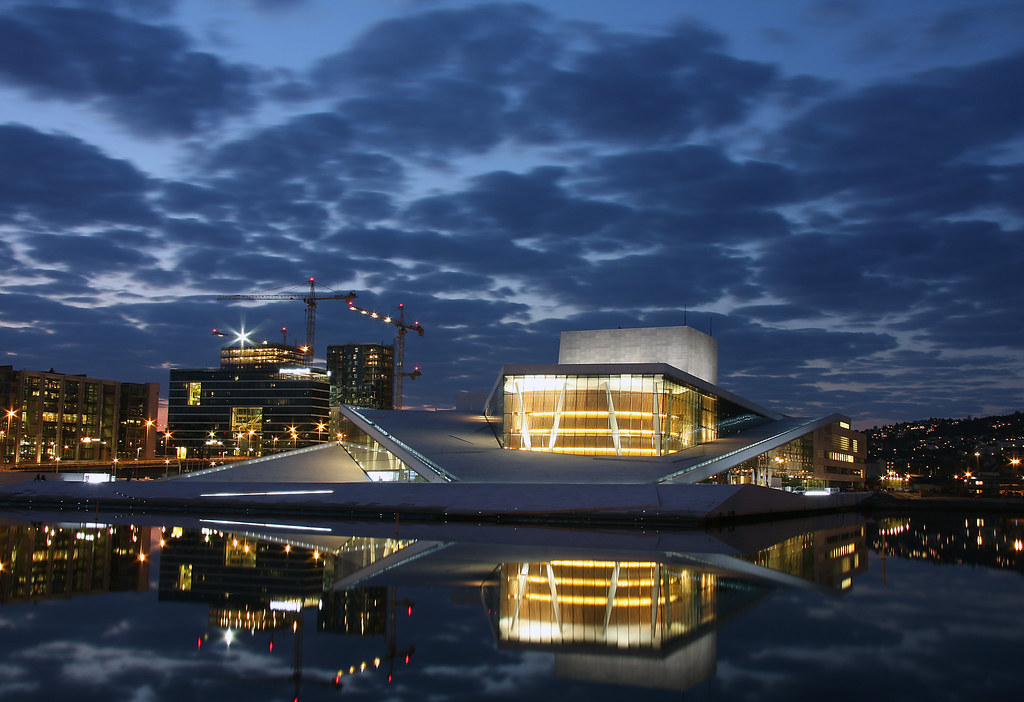
Not Everyone Lives in Oslo


Oslo by night. This work is licensed under under a Creative Commons License.
Once upon a time there was a spoiled little kid that received everything he pointed at, and more. The other kids, his brothers and sisters, were not so lucky, and they only became more and more disappointed. Why didn’t they get what their spoiled brother did? Or at least some of it? After a while the disappointment turned into silence. They could not be bothered to react anymore, they just realized that they were being treated differently.

Was this from a fairytale by H.C. Andersen? I certainly hope not. He wrote much better children stories than I ever will.

Too many options?
So what is the point of this little story? It is an attempt to describe what governments, network operators and broadcasters may be doing wrong too often in order to increase uptake and encourage constructive dialogue with users. They usually start building new services or networks in the big cities. The issue with big cities is that people there already have ‘everything’. They have amusement parks, theatres, cinemas, restaurants, ice skating rinks, cafes, pubs, and concert halls. And access to all kinds of media. Even digital radio (DAB) and MiniTV (DMB) too.

The two latter services are services that make the ‘other kids,’ in this case rural towns and villages, go silent. Yet again, the cities have received beneficial treatment. 80% of Norwegians are covered by DAB signals, around 20% by DMB.

What would have happened if the other kids got something that the spoiled one didn’t? Well, then he would probably have wanted it (based on my knowledge of spoiled kids). And what would have happened if DAB and DMB had been introduced in the countryside first? First of all, I believe that rural populations are more open for such new services as they are not at all spoiled when it come to what is on offer. They might even be grateful for being given such opportunities. After all, 10% of Norwegians can receive only one or two radio stations. And they do certainly not have amusement parks or cinemas. 

Cities last?
By first introducing DAB and DMB outside the cities the uptake would have been likely to be much higher (percentage wise) than what is currently the case. And feedback from those users would probably have been more productive and positive. Spoiled kids usually don’t even say thanks, let alone explain why they are not satisfied. But they do complain easily. (- Why do I need this? I like the other one better. This is not what I wished for.)   

Why were the DAB and DMB networks built in the cities first? If you look at the cost calculations, it makes sense. Every transmitter in urban areas will cover many more people than what is the case in rural Norway. But maybe this is not the most important factor initially. Maybe the goal should be to properly introduce a new service in a population that has time to appreciate it. Because they are not spoiled with choice or because they don’t even have an option. Only the population in the 13 biggest cities have access to 5 radio channels from NRK (Norwegian Broadcasting Corporations) via FM. The rest only have access to 3, 2 or 1 NRK channels. Less than 83% of Norwegian households have access to broadband at home. And do remember, the Internet Won’t Solve Everything, even if everyone has broadband.

Those living in rural areas have a much less varied choice when it comes to media alternatives than their counterparts in cities. Competition is limited, if at all present, and helping increase choice through new distribution technologies should be prioritized. This is now luckily being done in some countries. In Norway thanks to a government that has decided to give digital radio to everyone, increasing choice of radio stations thirteenfold to those living in the smallest villages.

A rural world
This blog post has not been written to blame broadcasters, governments or network operators in Norway or elsewhere for what has been done. DAB and DMB networks have been built with the best of intentions, namely to reach out to as many people as possible, often with limited budgets or in order to introduce a commercial service that needs as many users as possible to attract advertisers. And DAB and DMB services are certainly picking up speed and attracting fans in more and more countries. So is the access of advanced and attractive terminals. I just think that there may be a lesson there somewhere. For next time.

Because there are people outside Oslo too.

In fact, 57% of Egyptians, 27% of Russians, 23% of Norwegians, 18% of Americans, 13% of Danes and 10% of British live in rural areas. 

But who lives in Oslo and other cities? Well, almost all journalists writing about trends, media and technology and most analysts commenting and presenting on these issues do. That is quite natural, after all most media houses, analysts and creative agencies are based in cities. But that is still a problem, because they do not, or at least only rarely, get to experience the situation of people that live on the countryside. With poor, if any broadband connection, limited access to TV channels and radio stations. That is reflected in a fair amount of the articles that they write.

It is actually a good reality check to go rural for a while. I am from Naustdal, a small village on the Norwegian West Coast, and I do therefore get to experience the different media world every time I am at home. It's a good thing that the area compensates with a stunning scenery, fish in fjords and rivers, berries in the forests and unbelieveable hiking possibilities.  

P.S. My apologies to any spoiled kids out there, former or present, that may feel intimidated by the usage of ‘spoiled kid’ as a term. And I do not suggest that the inhabitants of cities are spoiled, we just have a much better choice of services than people living on the countryside.

Tuesday, January 25, 2011

Telenor Takes on Google

Telenor, Norways biggest ISP and telecom operator, wants to charge media companies to transport their videos to Telenors broadband users. This is being reported today in the financial newspaper Dagens Næringsliv. This would apply to Norwegian media companies such as Norwegian Broadcasting Corporation (NRK) and VG, the biggest newspaper, but also international media companies such as Google/Youtube and CNN.

Telenor predicts that data traffic will increase tenfold from what was the case in 2010 to 2015 as Norwegians increasingly use smartphones, laptops and tablets to watch streamed web videos and live tv.

- We have to adjust our infratsructure to manage uncontrollable traffic levels. That means that we have to over-invest in infrastructure to be on the safe side. Unless media companies start paying for traffic, customers will have to pick up the bill, or only the big ISPs with financial muscle will survive, CTO Rolv-Erik Spilling in Telenor tells Dagens Næringsliv.

Net neutrality threatened, and a remedy
This is a very good example of how to threaten net neutrality. Telenor wants to charge big media to guarantee that their content is delivered when the users want it, whereas those not willing to pay will ruthlessy be pushed into the slow lane. Telenors ISP operations make their money by selling broadband subscriptions to users. The users pay for good connections because they want to be able to enjoy all kinds of services, including video and tv. The media companies that have been interviewed for the article quoted above say that they will refuse to pay.

This case is an example that the Internet and the idea behind the Internet are starting to struggle, in part thanks to bandwidth consuming services such as video streaming. A good solution to help the situation is to start combining the Internet with broadcasting technologies such as DMB, DAB and DAB+. Then all live TV and radio will be broadcast to devices, something that will take a lot of strain off the Internet whilst improving quality of service to everyone. And possibly eliminating Telenors unreasonable demand of having media companies pay for this data traffic.

In order to make devices capable of supporting broadcasting, a broadcasting receiver/chipset must be built in or added through a USB port. This has already been done in a wide variety of devices in Korea and Japan. Such a chipset measures typically less than 3x3 milimeters in size, consumes 20-60mW and costs around one dollar. The first tablets and phones supporting DMB, DAB and DAB+ will reach European, South East Asian and Australian markets in 2011 .

I have previously covered this subject matter in this blog post:
Why Telecom Operators Should Love, Not Loathe Broadcasting. 

I have also explained why the combination of the Internet and broadcasting is the future:
Why the Internet Won't Solve Everything. 

Combination is the new king.

Friday, December 10, 2010

Broadcasting Isn't Only for Radio and TV

Broadcasting as a technology has been around for more than a hundred years, and everyone reading this has listened to and watched broadcasted radio and TV programmes. To broadcast means to send data to everyone with a receiver within the coverage area and the technology has no limits when it comes to the number of receivers. But is it only possible to broadcast radio stations and TV channels? Not at all. All kinds of data can be broadcast, something that opens up for a number of new and stable services with increasingly congested telecom networks.

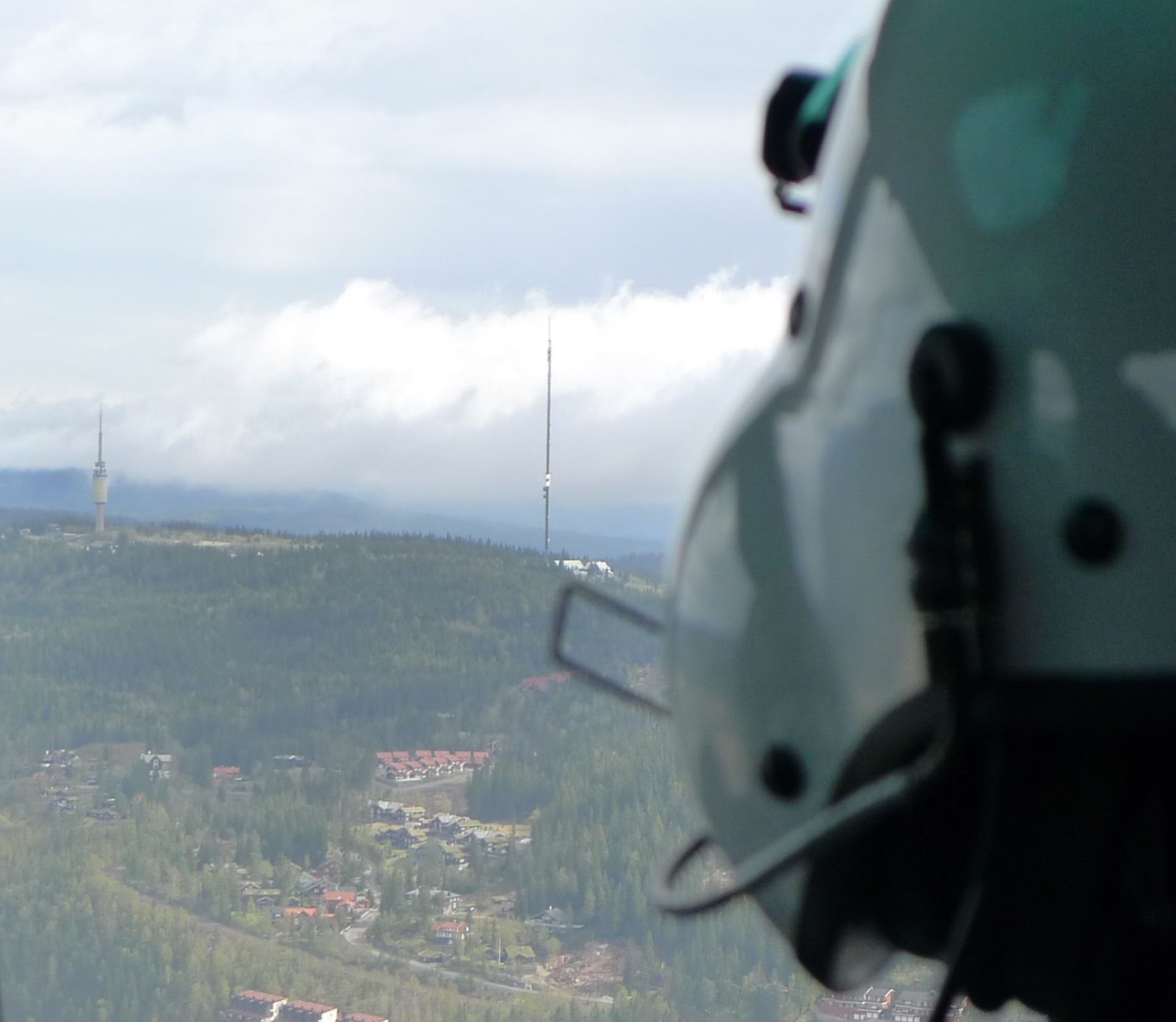
Tryvasshøgda, Oslo: MiniTV is being broadcast from the tower to the right.

Other examples of what broadcasting is great for:

1. Traffic information to cars
You can get live and updated information about traffic conditions in the area you are driving through a broadcasting technology such as DMB (which includes DAB and DAB+). By broadcasting such info everyone will receive the info at the same time, ensuring immediate notification about traffic accidents, slippery road conditions or closed roads. This information is sent to your navigation device (GPS) which automatically reroutes you if that is safer or will save you time. To broadcast this info is many times cheaper than using telecom networks (GPRS/3G), something that will save the supplier and you money. This is a hugely popular service in Korea with 19 different traffic services, and some of them even offer an update of maps. The most common standard for such traffic info is called TPEG.

2.  eMagazines to your phone or tablet
If you are one of those who are subscribing to electronic magazines to Android tablets such as Samsung Galaxy Tab or Apples iPad you may have noticed that they take some time to download. Instead of sending out the magazine via WLAN at home (or a slower telecom network on your way to work), it can be broadcast to the memory of your device at the same time in the morning as everyone else gets theirs. This may be especially useful if the alternative is to download it via a slow telecom network. It may also save the publisher money as they will not have to pay for distribution via the Internet (at a cost of around 3 Euro cents per GB).

3. Films, videos and music
You can even receive films or music tracks to your device, although you will have to settle for the files that are being broadcast into the memory of it. You can in other words not decide on your own, but will have to settle for whichever film or music files that are being broadcast. If you leave your device on overnight it may have however have been tanked up with several new blockbusters. And one night maybe, just maybe, Madonna might decide to give away her new album to those with the broadcasting device turned on.

4. Route information
At many bus stops and smaller train stations there is a small info screen that tells you when your bus will arrive. A solution to do this via DMB is being introduced early next year in the Netherlands. This info has so far usually been distributed through telecom networks. There are two challenge with such solutions. The data transport is expensive. And GPRS/3G/WLAN receivers consume a lot of energy. So much that electricity has to be installed on bus stops that may not have been equipped with electricity. To hook all the bus stops up to the grid is very expensive. DMB receivers use very little power. So little in fact that these receivers will run on solar power. And in Germany you will get access to city bikes by buying a tram ticket. On the tram you will see info screens that tells you how many bikes there are nearby the next tram stop. If there are none, you will be told how many more stops you have to go before finding an available bike. This info is also being broadcast. B2B information will in many cases see broadcasting fit as their distribution in the future.  

5. Radio relevant information
When listening to radio you can also receive additional information on the programme through broadcasting. Who is interviewing who? Which song and artist is being played, and what does the covers look like? You may also receive photographs and the sudden textual breaking news alert. And if you want you can press the screen when a new favourite song is being played to buy and download it via the Internet.    

6. Broadcast websites
Do you remember Teletext or Text TV as it has also been called? It was introduced in the early 1970s and give you a certain number of pages with text and very simple graphics on your television screen. You navigate by tapping a page number (100-899) on your remote control. After using it for a while you remember all the "front pages" by heart. It contains news, sports, weather, stock quotes, programme infromation and more. It's almost a mini version of the Internet, although with no links leading to outside this little walled garden. And it was hugely popular in many parts of Europe, even still remaining so in some countries. It has, of obvious reasons, never taken off in connected devices, but it clearly shows the possibility to also broadcast textual information. Books, photos or maps can also be transferred in this way. In fact, all known files can be transportted through broadcasting. The questions is just whether your device can read them.


These are just a few examples. There are many more. Please list ideas or examples as commentaries underneath the blog post. 


Broadcasting can never replace the Internet. But everything that is available via the Internet can also be broadcast to the same kinds of devices. And if you know of files or info that will be massively popular, it can be broadcast to everyone out there, cheaply and without gatekeepers. Combination is king. Combination is key. The industries should work together and make their content and services available through all networks suited for the job. Different networks complement each other.

Friday, December 03, 2010

Why the Internet Won't Solve Everything

There seems to be a common misunderstanding among a lot of journalists, experts, trend analysts and consultants that the Internet will solve all distribution problems in the world. In their opinion there is no need for broadcasting as a way of getting content to the thousands and millions and billions of people out there.

This is a very tabloidized, and a very wrong picture.

Unfortunately this seems to be creating a perceived truth among politicians, regulators, bureaucrats and other decision makers in a variety of countries. The perceived truth that the Internet can handle distribution of all content in the world. But why is this misconception a problem?

Well, because the Internet cannot cope when a lot of people want to watch or listen to something at exactly the same time. That is why broadcasting was invented. A broadcaster (owning TV channels or radio stations) send the signals out in the air, and EVERYONE in the coverage area can receive the signal, even if EVERYONE means 300 million or a billion people. And because telecom operators are trying to lobby governments around the world into taking frequencies from broadcasters, handing them to telecom operators so that there will be more bandwidth for wireless Internet. If they succeed, there will be a shortage of available frequencies (space to broadcast) for broadcasters. The victims will be viewers and listeners not able to receive their favourite TV or radio programmes.

- But broadcasting is old! The internet is new, the internet is the future, new media experts comment. The wheel is also old, but it still works perfectly for what it was designed to do and it will continue to do so in the future. So will broadcasting.
There are various broadcasting standards for radio and mobile TV out there. In Norway we are using DAB and DAB+ for radio and DMB for mobile TV. For TV most countries have already chosen DVB-T, ATSC or ISDB-T. For radio and mobile TV there is only the DMB family of standards (including DAB and DAB+) that is open, accessible through widely available devices and that has allocated frequencies in most countries. I do therefore examplify broadcasting through the usage of DMB, DAB and DAB+.


A list of 20
I have listed often neglected reasons for why broadcasting is still needed (updated from an original list of 8). A shorter version of this blog post can be found here.

1) Telecom networks go down if too may people use them. During emergencies and disasters, a broadcasting network is the only effective (and sometimes the only possible) way of getting information out to those affected. This is a reason why governments are considering legislation that will require a broadcasting chip in all mobile phones.

2) Broadcasters are in editorial control of their content, and should remain so. Having a gatekeeper acting as an additional editor or censorship manager is limiting democracy and free speech. A gatekeeper can be a government that cencors you through threats or force, an ISP or a telecom operator that limits content or users' access to it or someone controlling what applications/contents/services that will be made available on their platform. James Cridland covers this issue (for radio) on his blog.

There are however also other kinds of gatekeepers that can limit democracy and freedom of speech. Let us take Mark Thompson as an example. He ie editor of chief of the BBC, employing 30,000 people, many of whom are journalists. He is, and should be, the editor-in-chief. For some platforms, i.e. Apple or Facebook, he is not. These two examples are essentially walled gardens which are controlled by Tim Cook and Mark Zuckerberg. They suddenly become super editor in chiefs, above Mark Thompson, creating a less than free press as they will have to OK apps or feeds appearing on their devices or websites.

In April 2012, support for this point came from a somewhat unlikely source. Sergey Brin, one of the cofounders of Google warned against a dedemocratization of the internet in The Guardian. The reason? Gatekeepers.

3) The Internet is vulnerable to hacking and sites may relatively easily be taken down or halted. A broadcasting network is more secure. Bigger operations will usually be needed in order to hijack a broadcasted signal or a broadcaster. Viruses are also plentiful on the internet, now also on Apple products. Viruses are easy to create, and stopping them through anti-virus software is a multi billion industry.

4) DMB consumes a lot less power than GPRS/3G/WLAN. It is in other words a greener and much more environmentally friendly technology. And it makes batteries last longer. A DMB/DAB/DAB+ chip uses 25-60mW. A WLAN/GPRS/3G chip uses 1-7W. That means that DMB chipsets use between (updated due to calculation error) 0.36% and 6% of an IP chip. 0,36% is one twohundredandeightieth (1/280). Do also note that this only covere the receiving end of things. The transmitters needed for connected devices (inernet capable gadgets) are much higher than the number of transmitters needed for broadcasting in the same area.

5) Broadcasters must pay around 3 Euro cents per GB that is being transferred from their server park to the Internet. This may not sound like much, but if Norwegian Broadcasting Corporation (NRK) in little Norway with less than 5 million inhabitants were to distribute its radio and TV offering throughout a year via the Internet, we would be loooking at an amount of 4.9 Exabyte (which is 4,901 Petabyte or 4,900,662 Terrabyte). This is based on average viewing and listening times from NRK. The average Norwegian person over the age of 12 listens to NRKs radio stations over 35 hours a month and watches NRKs TV channels more than 40 hours a month. This would set the public service broadcaster back over 150 million Euro a year. This is highly hypotetical since there is no way that the Internet would be able to deliver this

6) Internet is not free and you have to pay for access. A subscription is needed (unless you find an open WLAN zone). If every average Norwegian was to watch TV via his/her mobile broadband subscription (the 11% of TV viewing that happens outside your home in Norway), the telecom operators would be generating 275 million Euro every month from Norwegian subscriptions (again given that the network could actually cope and that every Norwegian subscribed to the cheapest possible plan). Broadcasting is the most cost effective way to reach a vast number of people in a geographically large area.

7) The Internet is not wide enough when it comes to bandwidth. I will examplify this through some numbers which applies to mobile broadband. But of course LTE will solve everything. We are being told.

There are some problems though. To build an LTE network (often referred to as 3.9G or 4G) for 90% of the population in the UK would require 16,000 transmitters (and then a lot of roads and railroads would still not be covered). To cover the same with DMB, DAB and DAB+ would take less than 300 transmitters. Every LTE transmitter costs around 250,000 USD with running costs of around 60,000 USD every year. That requires an investment of 4 billion USD and operation costs of over 1,8 billion USD a year. If a telecom operator was to build such a network, 4 million customers, each paying 550 USD a year would be needed to break even.

LTE furthermore has a capacity of 31,68Mbps (given a 10Mhz channel) per transmitter. If all the users are located very near and with a direct view of the transmitter. If even one user is further away or behind a hill or a house, a different modulation scheme is needed, something that severly lowers available bandwidth. LTE may need up to 11 modulation schemes to reach users at different distances and locations from the transmitter.

31,68Mbps would give 78 users mobile TV at the same time (at a bitrate of 384Kbps) if all of them were very close to the transmitter and no one was using the same transmitter for any other kind of Internet surfing (mail, news, Facebook, downloads, etc.).

The LTE estimates were presented by Arqiva, a British company building and running various kinds of networks in October, 2010.

8) The Internet works poorly when the receiver travels at high speeds, or some times if moving at all. And a lot of people are listening to radio and watching TV while on the move. In cars, trains, trams, boats or even by walking. Streaming services (when large amounts of data are transferred continously as is the case with TV and radio) do not work well, even if there is coverage. And big areas are difficult and expensive to cover with Internet technologies. In Norway, 40% of radio listening is experienced outside peoples own homes, in most cases while travelling. DMB, DAB and DAB+ works well in speeds up to 900 km/h (tested on planes), and such broadcasts can cover vast areas.

9) The Internet through broadband is neither broad nor stable if you are far away from a switch. That includes a lot of households in rural areas. They have always had much poorer quality on their Internet connection than people in cities, sometimes the ISPs even refuse to give them a connection due to costs that they will never recoup.

10) Broadcasting is not only for live radio or TV, but is a very universal distribution technology. Any file can be broadcast, either for live consumption or to the memory of a device. This can include an eMagazine to a tablet (delivered simultaneously to everyone each morning), traffic information to your navigation/GPS device or films and music to your phone. I have covered this in more detail in the blog post Broadband Isn't Only for Radio and TV.

11) The Internet may not be open in the future as the net neutrality is being challenged in various countries, including in the United States, Norway and Canada. The more people want to use the Internet, the more bandwidth is becoming a luxury (see point 7). As with almost all forms of goods and services, a luxury market will then emerge. But the Internet has limited capacity, so if certain websites are going to be able to pay for guaranteed bandwidth, the bandwidth will have to be taken from the available bandwidth of others. Even though all content providers (websites) currently should in principle have the same possibilities to access end users with their content and services. As long as certain websites will be able to pay a premium to reach  the end users, that will hamper free competition and the principle of net neutrality. Some ISPs now also want to charge in both ends. Meaning from both the consumer and the companies providing information there (i.e. Youtube, CNN, NRK). Update: Telenor Takes on Google.

12) In order to cover a big country as Norway (area wise) with DMB between 500 and 600 transmitters are needed as the reach is good and as the signal is error protected and robust. A DMB signal that bounces off a mountain or a big building is also strengthened, while an analogue signal that bounces is destroyed. To cover the same 99.8% of the country (as the 500-600 DMB transmitters will do) with Internet, many more transmitters are needed.

13) The Internet is vulnerable. Imagine that all infrastructure has to go in or on top of the same ditch. Water, electricity, sewage, cable TV, telephone lines, Internet, roads, railroads, etc. If you have to repair only one of these networks, you will have to disrupt all of them. If all distribution of content and services is to be forced into the same 'cable' the scenario is similar. It is easy to shut down, as seen in Egypt and Libya (updated in February, 2011). Only one distribution channel for everything means no backup. Always have a backup plan.

14) Several countries have introduced The Data Retention Directive, EUs Directive 2006/24/EC. This states that all electronic communication will be stored for up to one year (half a year in Norway) in order for national governments (specifically police, security agencies, etc.) to have access to everything in order to prevent crime. Isn't that nice and caring of them? This has however not prevented crime anywhere, and it totally changes the widespread and much stated doctrine from "innocent until proven guilty" to "guilty until proven innocent." In a digital world, everything you do will leave a trace and you cannot hide. The consumation of broadcasted content is still an exception. You can watch or listen to anything without anyone knowing about it. This is now no longer the case on the Internet. I'd recommend you to read more about the directive here, in the words of Peter J Milford, Southampton Business School. Norwegian readers can also find a lot of well formulated thoughts on the issue by NRKs lawyer, Jon Wessel-Aas.

15) It is neither economical, effective nor attractive to continue doing double distribution. The Internet cannot cope with enormous amounts of concurrent viewers or listeners. Broadcasting will  therefore be a needed technology "forever." To build a net that is capable of delivering live television or radio to hundred of millions of users at the same time (as during Super Bowl or the Eurovision Song Contest) will never prove a viable business model.

16) We are still seeing an explosion in data traffic passing through the internet. More data was transferred over the internet in 2010 than all previous years, according to Intel. And the growth is not going to slow down. First of all, we are seeing an explosion in cloud services. People and companies store their data in the cloud rather than on their hard drives. That demands a lot of capacity. And the number of internet capable devices is skyrocketing. In 2011 there were 5 billion connected devices in the world. That number is projected to reach 15 billion by 2015 and 50 billion by 2020. A much higher number than the number of people, in other words (there are 7 billion people in 2012, there will be 7.3 billion in 2015 and 7.6 billion in 2020). How? There are a lot of M2M (machine to machine) services being introduced, i.e. automatic registration of electricity usage or cars that are equipped with an internet connection. To want to transfer all radio and TV traffic to the internet in addition to everything else that is going through that infrastructure does not make any sense, nor will anyone want to fund that. And of course, one of the buzz words of 2012 is cloud computing. Many people and companies put all their data in the cloud (accessible via the internet). This increases the bandwidth needed manifold.

17) Many ISPs and mobile network operators argue that the only way forward is to take frequencies from broadcasting and give them to themselves in order to provide people with more bandwidth. This would hardly help and would be very shortsighted. The usage of bandwidth is estimated to increase 70 times the next 15 years. So even if MNOs can access more spectrum (they are currently trying to get their hands on spectrum currently used by broadcasters), it would hardly help at all. Giving them that would only ensure that valuable means of distributing mobile data will end up in the hands of very few companies, creating monopoly like conditions. Who would want that?

The report The Economic value of Broadcast Innovation - Impact on the U.S. Treasure, was publsihed by Business Analytix Inc. in November 2011 shows this clearly, and concludes.
A linear increase in the supply of spectrum cannot solve a geometric increase in demand for mobile data. The projected growth in mobile data traffic is so great that re-allocation of television spectrum would provide only temporary and barely discernible relief.
Broadcasting spectrum must remain in the hands of broadcasters that operate independently of MNOs and ISPs.

18) Broadcasting does not discriminate. The internet does. How can I claim such a thing? Personalization is about to make a divide between internet users. What you read, watch or listen to is more and more often influenced by your previous behavious online. What are your interests, what do you like reading, where in the world are you and who are your friends? Past behaviour on the internet while you are logged in to sites such as Facebook or Google or cookies monitoring your behaviour on behalf on sites you haven't even logged into help websites personalize what you get to see and what you won't get to see. Even a web search for the exact same phrase may return very different answers depending on who is searching and from where. This fragments web surfing and takes away the equality of users. I'd say it is like discrimination. When watching broadcasted TV, listening to broadcasted radio or even reading news via teletext (Ceefax) you will get exactly the same as everyone else within coverage, and at the same time too. Broadcasting threats everyone equal. Websites should offer users a "button" where they can switch off such monitoring, usually referred to as personalization which sounds like a helpful service. Websites do this as they make more money off advertising, but it may not be the best solution in the long run. More on this here.

19) Radio and television will "always" be best live. Not all content in all situations, of course, but the majority. Why? Neither sports nor news (especially breaking news) is well suited for watching or listening to "on demand". If you don't consume it live, you'll be left out. Every program will also necessarily need to have a premiere and a lot of people want to be the first to enjoy it. Just as is the case with cinema premieres around the world. The rise in discussions during programmes via chats and soacial media is also due to the fact that people watch or listen simultaneously. Otherwise you cannot discuss something equally. Being served, as opposed to having to go get it youself is also an element. Live broadcasts are served to you while you relax in the sofa. Luxury! On demand programs you will have to find and start on your own. Linear stations will also surprise you. New programs, new genres or new music will suddenly appear. And they will do so regardless of your what you have watched or listened to before. Because broadcasting doesn't discriminate. Everyone gets the same at the same time. And it has not even been personalized based on what you have done before, where you are or what your friends like or do not like. Not to mention emergencies. There are, in short, many reasons for the never fading success of live radio and TV.


20) If broadcasters cannot distribute their content via efficient and cost effective broadcasting networks they will have to fight over access via the internet and compete with everyone else that is depending on the internet for their services. These "others" may have built their business models purely on internet distribution. Unless there is an option to the internet, broadcasters will have to fight over bandwidth with these companies. That weakes the bargaining power of broadcasters in order to distribute radio and television programmes and channels, and also puts pressure on non-broadcasters.

Combination is the new king
Does this blog post mean that I am not in favour of the Internet? Of course not. The Internet is amazing and opens up for unlimited possibilities. But it is not constructed to be used as a distribution platform for the same content to many people at the same time. What I do believe in is a combination of technologies. Anyone with a little DIY knowledge knows that you need the right tool for the job. Broadcasting is great for some things, the Internet great for others. Combination is the new king. Combination of broadcasting and on demand content (the Internet), combination of content and services (when a return channel usually is needed, i.e. the Internet), combination of TV and radio and combination when it comes to partnerships between industries and even competitors. Not to forget a combination of technologies, also for live content that is being broadcasted. Some people will in certain situations or contexts prefer i.e. webradio to a stand alone kitchen radio.

All the great TV and radio channels and programmes out there need be distributed unfiltered via at least one distribution platform, without any gatekeepers (i.e. ISPs, telecom operators, Apple) that in effect act as editors by possibly filtering out the content or as bouncers by turning the users away.

The goal of this blog post? To contribute to a more fair and balanced discussion when it comes to distribution platforms. The Internet will not and cannot solve everything.

A shorter version of this blog post can be found here.

Follow @garfors on Twitter for notifications on new posts.


NMTV launched 6 TV channels via DMB as MiniTV in 2009. 4 transmitters cover 25% of the Norwegian population.